
Hospitals are among the most complex environments to manage from a hygiene perspective. Every day, thousands of people move through these facilities, from immunocompromised patients to clinical staff and visitors. While hospital cleaning protocols define the specific steps for each task, hospital hygiene plans go further: they are integrated strategies that optimise resources, reduce operating costs and help maximise effectiveness in the prevention of hospital-acquired infections.
Protocols and hygiene plans: key differences
A hospital hygiene plan goes beyond a simple list of tasks. It brings together scientific principles, advanced cleaning equipment and operational management, a combination that allows us at HeySupply to build integrated systems that work efficiently and sustainably.
Hospitals that implement well-structured hygiene plans can reduce by up to 30% the time spent on cleaning tasks by specialist contractors, which can translate into significant cost savings.
Scientific foundations: the Sinner Circle
The effectiveness of any hygiene plan depends on understanding the Sinner Circle, which defines the relationship between four key factors: chemical action, mechanical action, temperature and time. In hospital settings, this relationship becomes especially important because of the wide range of pathogenic microorganisms and the different risk zones found across the facility.
Technical classification of risk zones
Hospital areas are divided into three categories according to microbiological risk level:
- Low-risk zones: Administrative areas, reception spaces and general corridors. These require daily cleaning with standard disinfectant products.
- Medium-risk zones: General inpatient rooms and outpatient consultation areas. These require more frequent disinfection and more specific products.
- High-risk zones: Operating theatres, ICUs and laboratories. These demand strict protocols and broad-spectrum products, with no room for error.
This classification determines the selection of tools, chemicals and specific techniques that hospitals should require from their contracted cleaning provider.
The microfibre shift: applied science
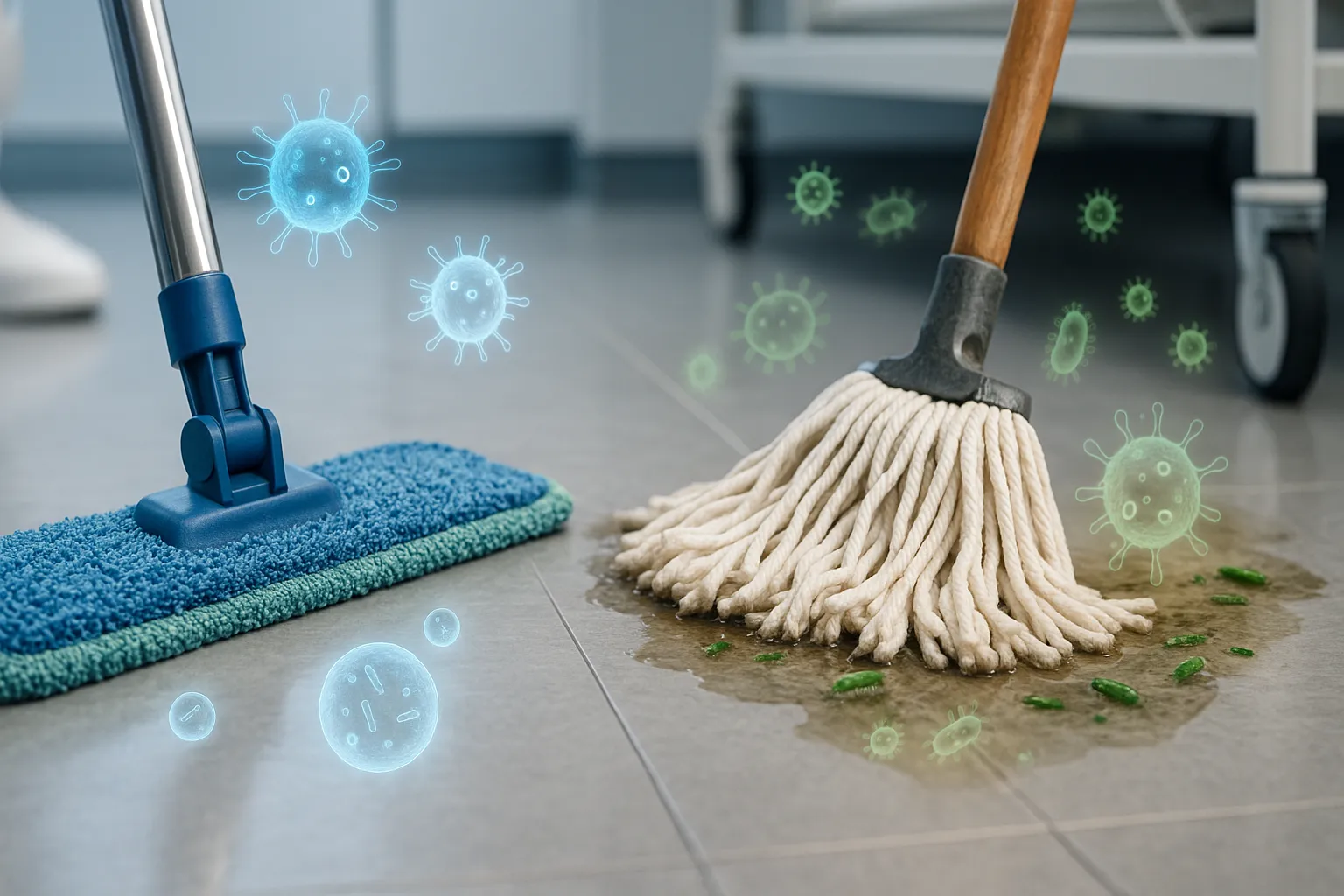
Microfibre represents a major advance in hospital cleaning because of its ability to remove pathogens and its contribution to sustainability. Microfibre mops can remove up to 98% of bacteria and 93% of viruses, significantly outperforming traditional methods.
Economic analysis and cross-contamination prevention
A well-maintained microfibre mop can last up to 2 years, completing more than 500 wash cycles without losing effectiveness. In medium-sized hospitals, this can generate major annual savings in both materials and waste management.
In addition, using a colour-coded system with washable mops ensures that each tool is used only in its designated area. Hospitals that implement these systems are likely to significantly reduce incidents related to cross-contamination.
Chemical optimisation by zone
In hospital infection prevention, efficient chemical management requires a technical approach that considers both antimicrobial effectiveness and staff safety. Different risk zones require different concentrations: low-risk areas work with lighter dilutions, while critical areas require higher concentrations.
ATP: monitoring and verification system
ATP (adenosine triphosphate) technology in hospital hygiene is used to measure surface cleanliness by verifying the presence of organic matter, which may indicate the presence of potentially harmful microorganisms. This technology enables rapid and accurate assessment of the effectiveness of cleaning procedures, helping prevent contamination risks and maintain optimum hygiene standards.
Ergonomics and occupational risk prevention
Ergonomics is not only about staff wellbeing. It is also a key factor in operational efficiency. Sick leave caused by musculoskeletal injuries in contracted cleaning teams can account for up to 40% of absenteeism.
Ergonomic tools and handling techniques
Modern cleaning trolleys include adjustable-height systems, organised compartments and highly manoeuvrable wheels. When combined with lightweight microfibre mops, they help reduce injuries linked to cleaning tasks.
Training in correct techniques, such as the “S” pattern for mopping and the proper distribution of body weight, also improves task efficiency while maintaining higher quality standards.
Continuous training: the foundation of excellence
Continuous technical training makes the difference between a theoretical plan and an effective one. Hospitals that require specialist training programmes from their providers achieve stronger results in both effectiveness and efficiency.
Key training areas and certifications
Training programmes in hygiene should cover understanding the Sinner Circle, selecting tools and equipment according to surface type, chemical dilution techniques and ergonomic principles. Training in cross-contamination prevention is especially critical: well-trained teams significantly reduce incidents linked to hospital-acquired infections.
Hospitals are increasingly adopting certification systems to assess providers, setting minimum requirements that materially improve quality standards across the sector.
Sustainability and environmental responsibility
Sustainability in hospital hygiene has a positive impact on both reputation and operating costs. In the global implementations we develop at HeySupply, environmental responsibility takes shape through:
- Certified cellulose dosing systems. These can reduce discarded waste by up to 50%, with savings of up to 30% compared with conventional methods.
- Centralised disinfectant dosing. These provide precise control over product consumption, reduce environmental impact and keep cost per use tightly controlled, which can translate into significant savings for hospitals.
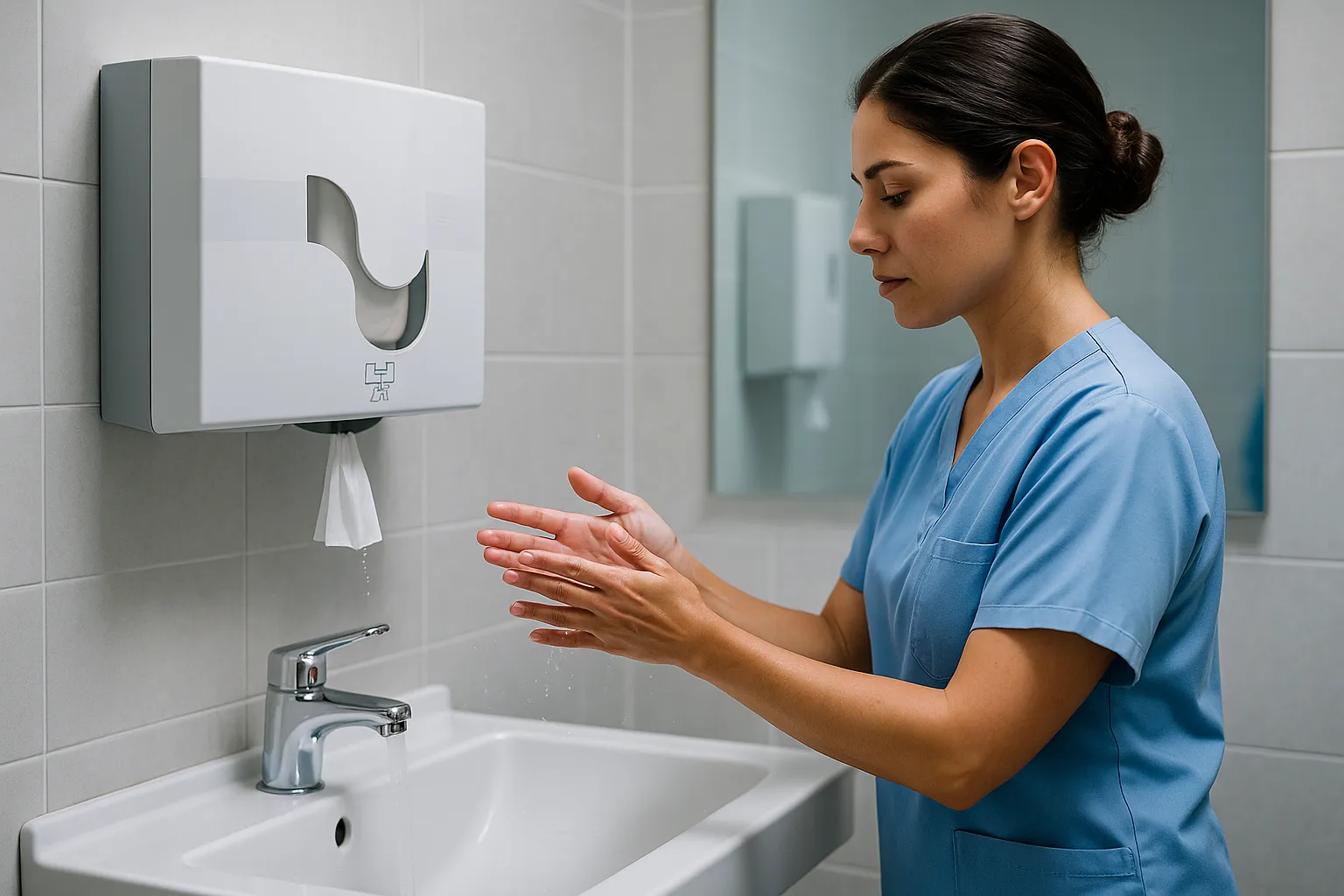
In addition, washable microfibre mops can eliminate up to 90% of the waste generated by other disposable materials, thanks to their long service life of around 2 years, or up to 250 wash cycles*, making a meaningful contribution to sustainability.
The integration of these smart control and dosing systems by HeySupply allows hospitals to meet environmental targets while optimising operational resources.
*In hospital environments, and in other settings where less aggressive products are used, they can withstand up to 500 wash cycles, with a service life of up to 5 years.
HeySupply: expertise in hospital hygiene plans
With our experience in the sector, at HeySupply we understand that a strong hygiene plan requires an integrated approach that combines technical knowledge, the right tools and continuous training. Our track record as distributors of professional cleaning machinery in Spain, together with the manufacture of our own eco-friendly cleaning product range, allows us to develop plans that optimise processes and reduce operating costs.
We work with hospitals to help them assess and select providers that implement integrated systems. Our approach is based on simplifying complex processes and transferring technical knowledge so that specialist teams can operate at maximum efficiency.
From tool selection to training in chemical management and workplace ergonomics, we provide the technical support hospitals need to achieve the best results from their cleaning providers.
Conclusion
Successful implementation requires a deep understanding of needs, careful selection of tools and a clear commitment to the continuous training of specialist teams. Hospitals that adopt this integrated approach improve hygiene standards, optimise resources, reduce operating costs and create safer environments.
In a sector where cleanliness is non-negotiable, hygiene plans become a strategic investment that benefits the entire hospital community.
Collaboration between hospitals, specialist providers and a technical distributor such as HeySupply is essential to achieving these goals.