
Maintenance managers face a frustrating reality: professional cleaning equipment that should last 10 years often fails after just 3 or 4, generating repair costs that exceed the machine’s residual value.
The difference between facilities that maximise the service life of their equipment and those that face repeated breakdowns is not the initial budget, but the systematic implementation of preventive maintenance.
This guide sets out the specific maintenance protocols that can double the service life of professional cleaning equipment, while reducing operating costs and unplanned downtime, with a few practical examples of common machines.
Why maintenance fails in most professional facilities
Around 80% of breakdowns in professional cleaning equipment are preventable through basic maintenance protocols. However, most facilities lack documented procedures, trained staff or monitoring systems to ensure these tasks are carried out consistently.
The most common mistakes include carrying out maintenance “when someone remembers”, relying on untrained staff to spot early signs of wear, and using incompatible spare parts that compromise critical components. These failures accumulate over time until they lead to major breakdowns that require costly repairs or premature replacement of the machine.
A further problem is the lack of distinction between daily, weekly and quarterly maintenance. This creates confusion about responsibilities and intervals, so critical tasks are often missed until the equipment fails.
Daily maintenance: basic routines that prevent 70% of breakdowns
Automatic scrubber dryers: five post-service tasks that are critical
Daily maintenance has a direct impact on the service life of scrubber dryers. Squeegee blades must be cleaned after every use to remove residues that affect suction performance. A worn blade leaves water streaks behind, forcing teams to go back over the same area and doubling both time and operating cost.
The clean and dirty water tanks need to be fully emptied and rinsed after each service. Residues left behind create bacterial biofilm that blocks dosing systems and contaminates the clean water used in the next cycle. This biofilm is especially problematic in healthcare environments where disinfection is critical.
Rotating brushes should be visually checked for uneven wear or build-up of residues. A worn brush reduces cleaning effectiveness and creates unbalanced pressure that damages the rotation mechanism. Cleaning vacuum filters helps prevent suction loss and motor overload.
Industrial vacuums: capacity and filtration
Industrial vacuums lose efficiency when the tank exceeds 80% capacity. Compacted dust reduces airflow and overloads the motor, dramatically shortening its service life. HEPA filters need to be cleaned or replaced according to the manufacturer’s specifications in order to maintain filtration performance.
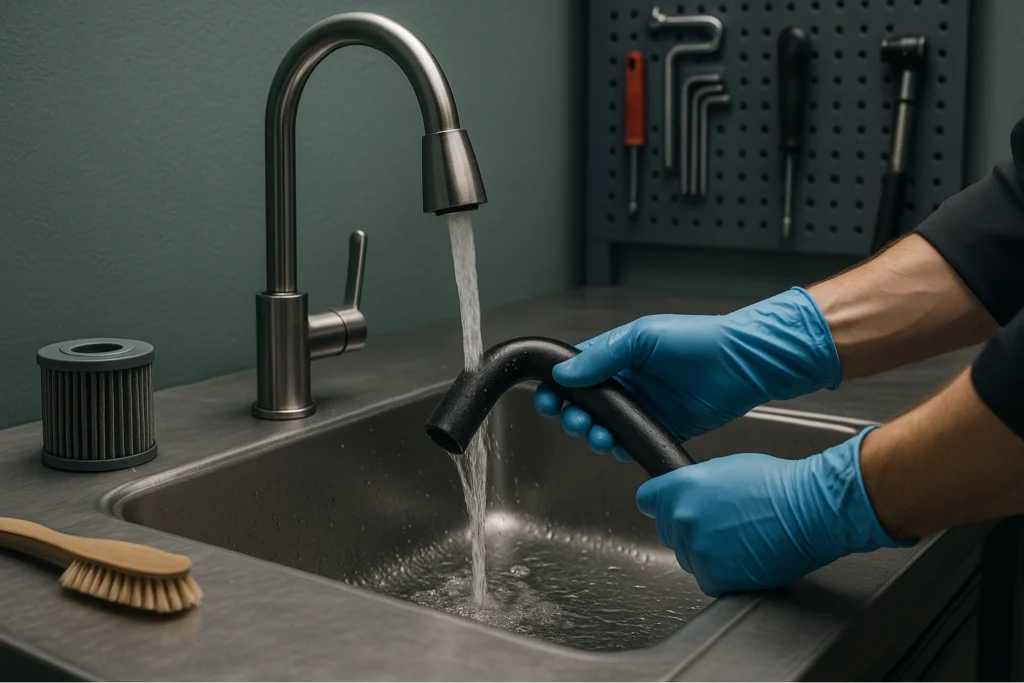
Hoses and accessories should also be inspected for cracks or loose connections that reduce suction. A quick visual check after each use can prevent larger problems later.
Steam generators: preventing limescale build-up
Professional steam generators accumulate limescale in the boiler when they are not fully emptied after each use. Hot residual water accelerates the formation of mineral deposits, reducing thermal efficiency and potentially blocking internal ducts.
Using softened or demineralised water significantly extends the time between deeper descaling procedures. The discharge valve should also be operated periodically to remove sediment from the bottom of the boiler.
Weekly and monthly maintenance: scheduled wear components
Brush rotation and replacement
Scrubber dryer brushes have a defined service life depending on the floor type and frequency of use. Rotating brushes periodically distributes wear more evenly and helps maximise their lifespan. Signs of wear include loss of bristle stiffness, deformation of the support or poor cleaning performance in a single pass.
Preventive replacement before total wear helps avoid damage to drive systems. A fully worn brush creates vibrations that can compromise bearings and mechanical couplings.
Dosing systems and batteries
Automatic dosing systems require monthly cleaning to remove detergent residues that clog valves and pipework. Calibration checks help ensure the correct concentration, improving results without wasting product.
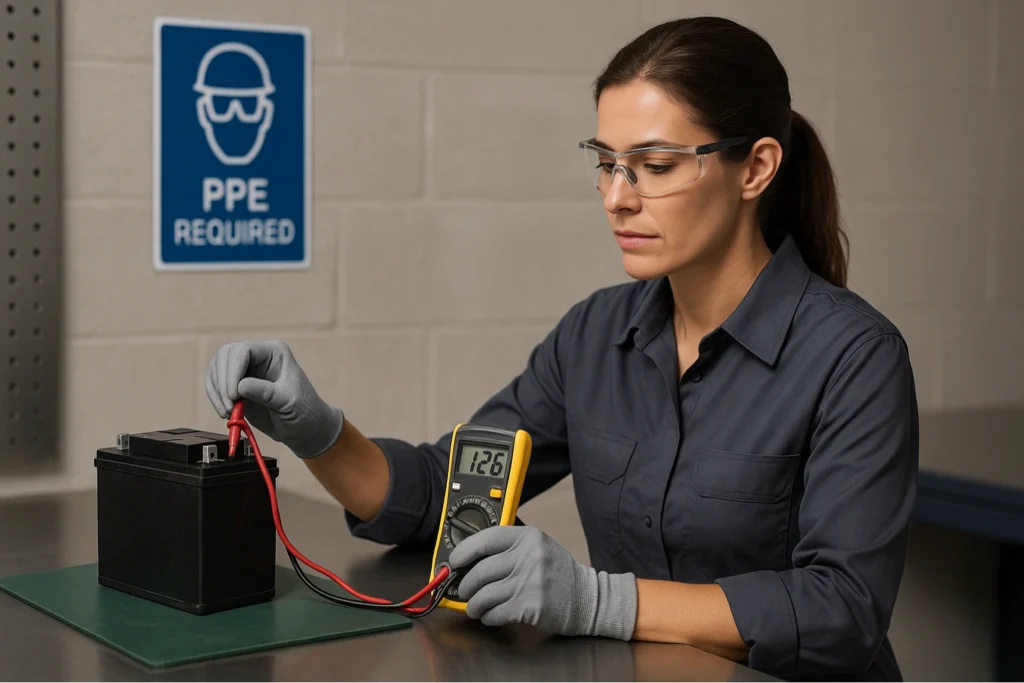
Lithium batteries in automatic scrubber dryers also require correct use, including proper fast charging when needed and avoiding deep discharges that reduce life cycles. Electrical connections should be checked for corrosion or looseness, as these create resistance and overheating.
Warning signs: when equipment needs specialist technical inspection
A gradual loss of performance is the most common indicator of early-stage problems. A scrubber dryer that now needs several passes to achieve results it used to reach in one should be technically assessed. Reduced autonomy in battery-powered equipment may point to cell deterioration that requires professional evaluation.
Abnormal noises such as squeaks, vibrations or knocking sounds indicate worn bearings, component misalignment or loose elements that may cause greater damage if not corrected. Leaks of water or product can also compromise electrical systems and create safety risks.
Original vs compatible spare parts: impact on equipment life
Original spare parts are manufactured to exact tolerances that ensure perfect compatibility with existing components. Original squeegee blades use specific compounds that maintain flexibility across wider temperature ranges without degrading prematurely.
Compatible or generic components may have dimensional tolerances that create slack or forced fittings. A blade that is too rigid will not seal correctly; one that is too soft will deform quickly. Generic brushes may use unsuitable materials that damage delicate floors or wear unevenly.
The impact on warranty is another critical factor. Many professional equipment warranties become void when unauthorised spare parts are used, leaving the user without cover for expensive repairs. Any initial saving on the generic part is often lost several times over when it causes failure in more expensive components.
Staff training: the difference between correct use and equipment abuse
Untrained staff accelerate wear through the incorrect use of settings, excessive pressure or unsuitable accessories. A scrubber dryer operated at excessive speed on uneven floors is exposed to impacts that damage the frame and mechanical components.
Incorrect manual dosing of chemicals causes residues that block systems, while concentrations that are too strong damage seals and rubber components. Manufacturer-led training helps operators understand the available settings and when each configuration should be used.
Preventive maintenance costs vs emergency repairs
| Concept | Preventive maintenance | Emergency repair |
|---|---|---|
| Average annual cost | 8–12% of equipment value | 25–40% of equipment value |
| Operational downtime | Planned, during lower-demand periods | Unplanned, during critical hours |
| Expected service life | 8–12 years | 3–5 years |
| Productivity | Maintained at 95%+ | Progressively reduced |
A machine worth €10,000 with preventive maintenance generates annual costs of around €1,000–€1,200, distributed in a predictable way. Without maintenance, emergency repairs can reach €2,500–€4,000 per year, often concentrated at critical moments that disrupt operations.
The residual value of correctly maintained equipment can recover 30–40% of the initial investment after 8 to 10 years of service. Equipment with no maintenance has residual value close to zero and usually needs to be replaced much earlier.
Annual maintenance protocol: schedule by equipment type
Quarterly inspections
Quarterly technical inspections should include calibration of dosing systems, pump pressure verification, diagnosis of electrical systems and evaluation of mechanical transmission components. These checks identify wear before it develops into failure.
Full annual maintenance
A full annual maintenance programme includes deep descaling of steam generators, preventive replacement of critical seals, full inspection of vacuum systems and firmware updates in equipment with advanced electronic components.
Detailed documentation of each intervention creates a technical history that helps identify wear patterns and optimise maintenance intervals according to actual operating conditions.
HeySupply: specialist technical support for professional cleaning equipment
As authorised distributors in Spain for brands such as Taski, Lavor and Numatic, among others, HeySupply provides direct access to original spare parts with guaranteed compatibility and performance. Our specialist technical team offers support through each manufacturer’s official warranty channels, ensuring interventions are carried out according to exact specifications.
The full training included with every equipment purchase prepares operators in correct use, specific settings, cleaning and daily maintenance, helping maximise service life from day one. We also provide technical documentation and tailored maintenance protocols according to installation type and usage conditions.
Systematic preventive maintenance is not a cost. It is an investment that pays back many times over through longer service life, fewer repairs and better operational continuity. Professional cleaning equipment only delivers optimal return on investment when it is maintained in line with the manufacturer’s technical specifications.
Contact HeySupply for a technical review of your maintenance protocols and we will show you how to optimise your machinery investment.